Early heater corrosion
Heat exchanger scale and corrosion shows up as a faint rust line at the cabinet base. Catch it early, swap the anode, and the heater lasts.
It's hard to find a company you can fully trust after the last route guy ghosted twice. You were looking for a reliable and honest technician, not a sales pitch. This Long Beach guide shows what a pro catches that DIY misses, the dollar bands, and the honest carveout.
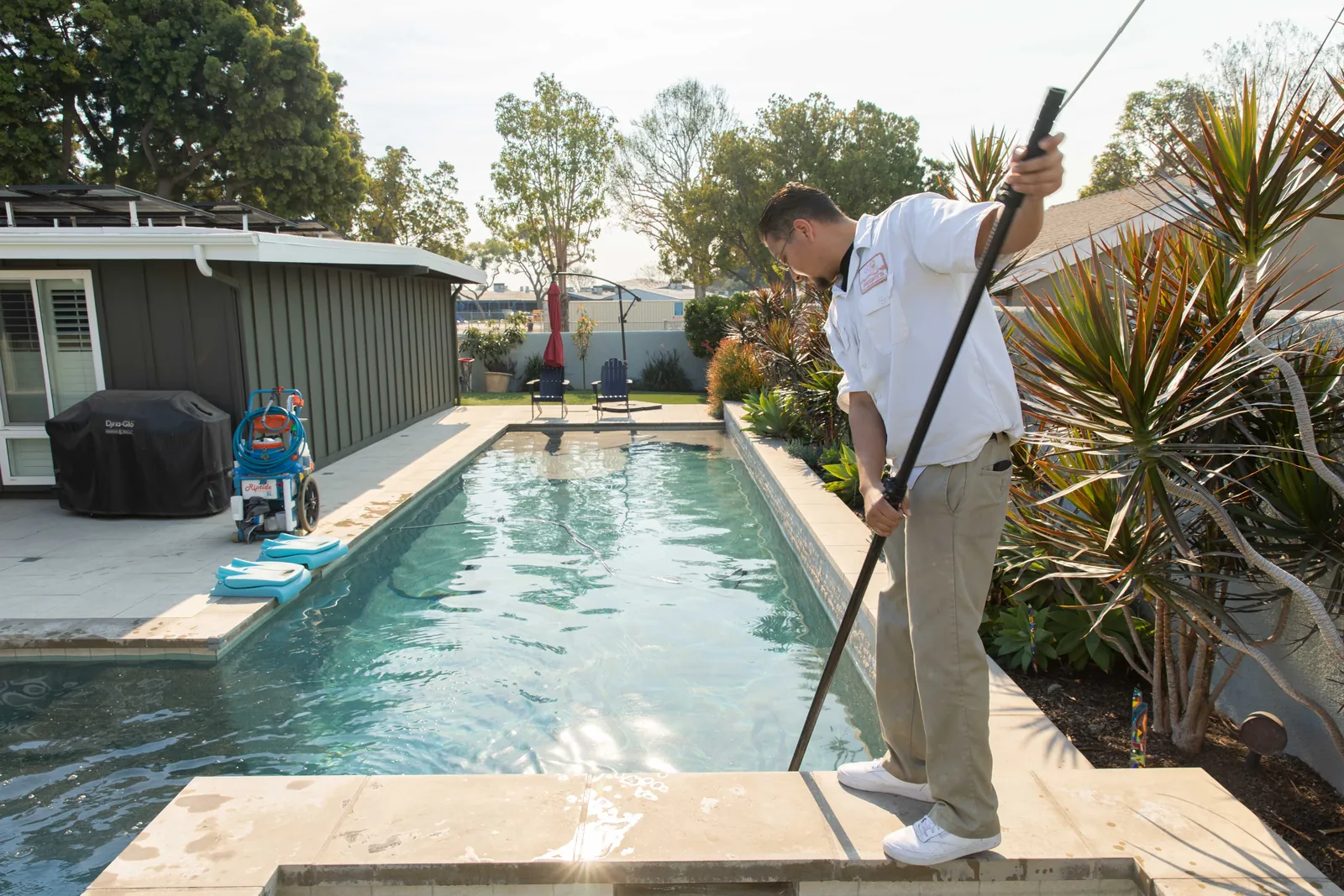
Hire a professional pool service for five reasons. Chemistry expertise, equipment lifecycle protection, three to five weekly hours back, manufacturer certifications that keep warranties intact, and early-warning detection on pump and heater failures.
The sections below walk through each reason. Real dollar bands, specific catches DIY misses, plus an honest carveout for who actually wins with DIY.
Six routine catches a route tech makes that a homeowner with a test strip rarely sees. Each one matters before the part fails.
Heat exchanger scale and corrosion shows up as a faint rust line at the cabinet base. Catch it early, swap the anode, and the heater lasts.
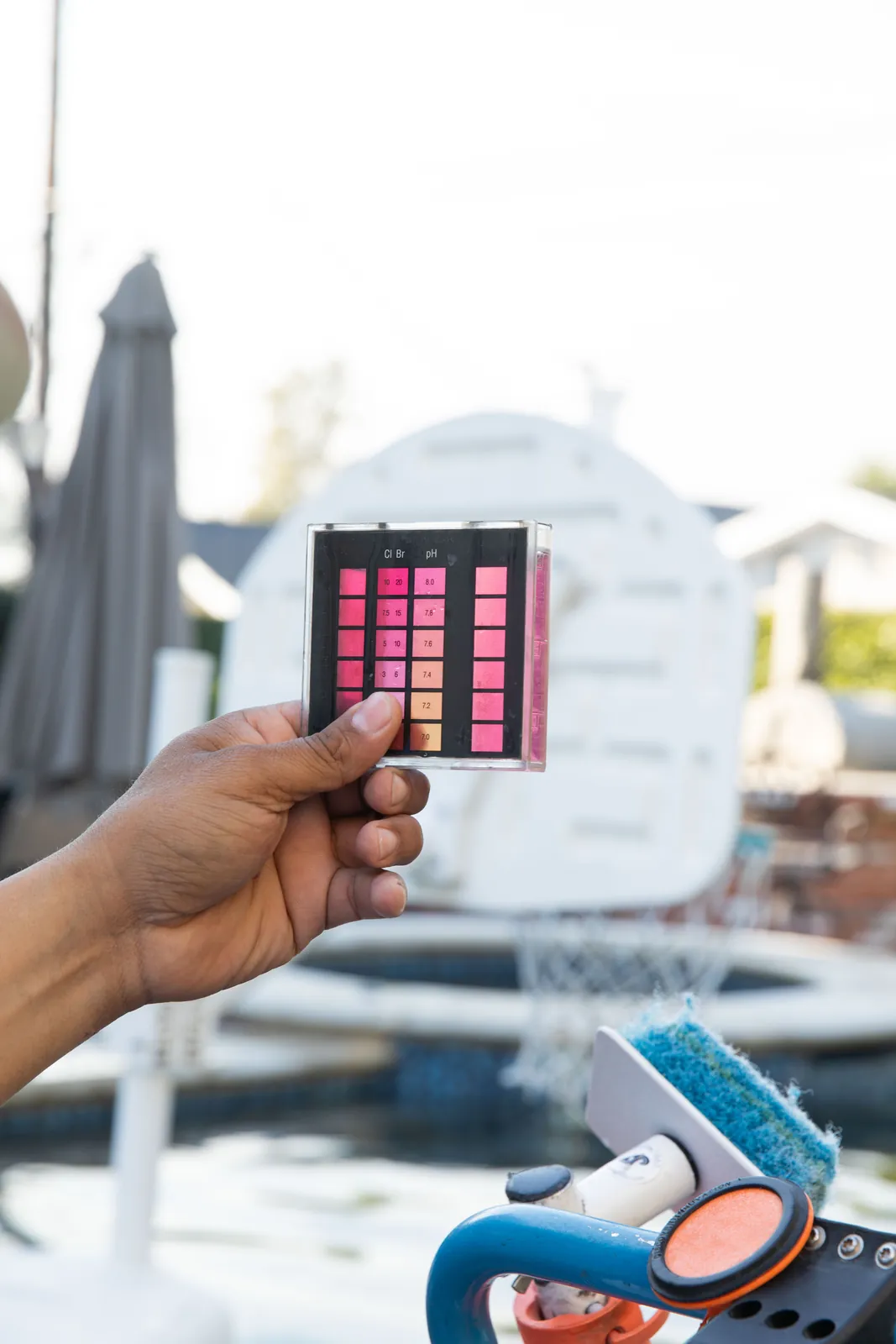
Cyanuric acid creeps up from puck chlorine. Past 80 ppm, chlorine stops working. A pro tests CYA monthly and recommends a partial drain.
Salt cell plates wear, amperage drops, and chlorine production fades. A tech reads the cell on the controller before swimmers feel the difference.
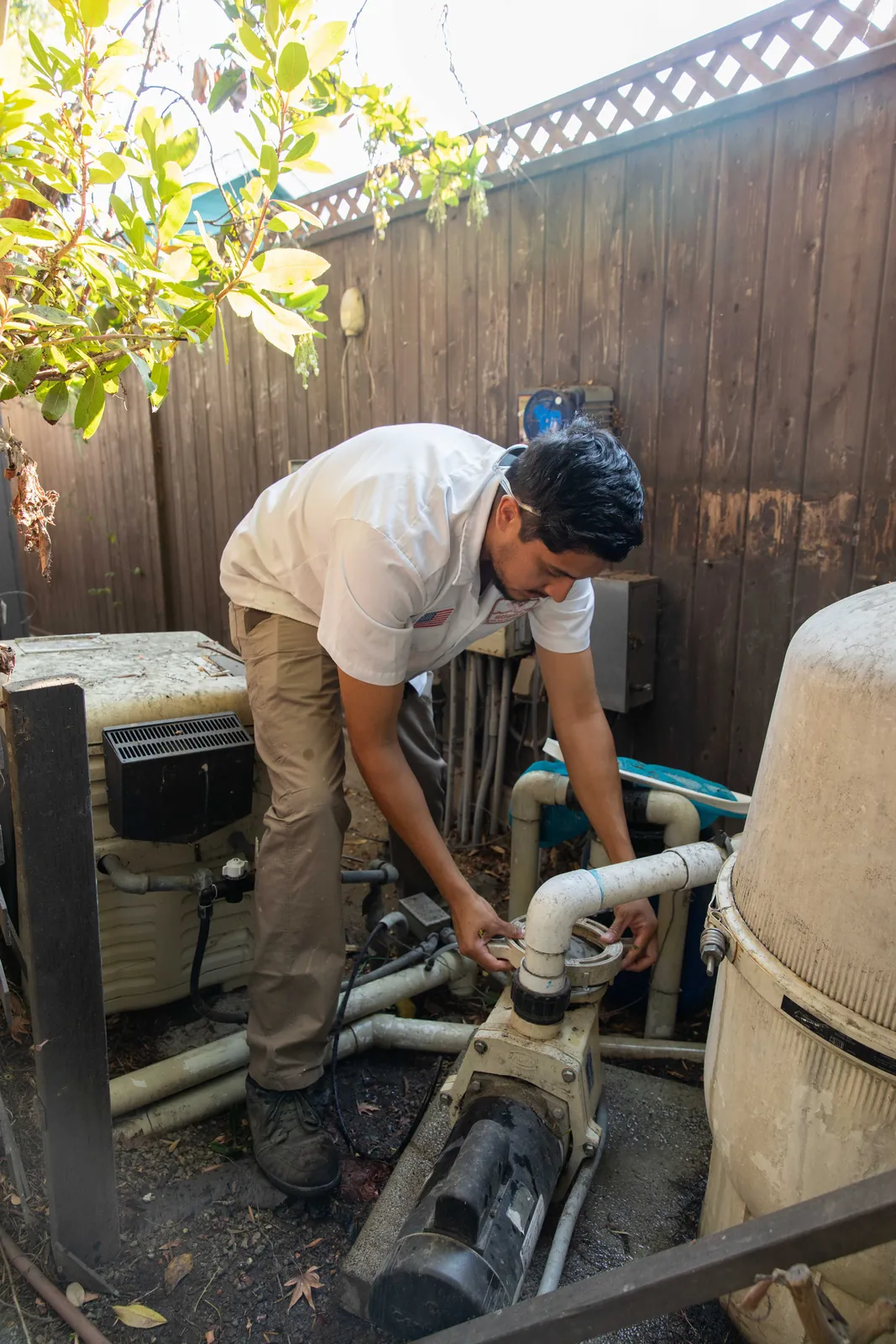
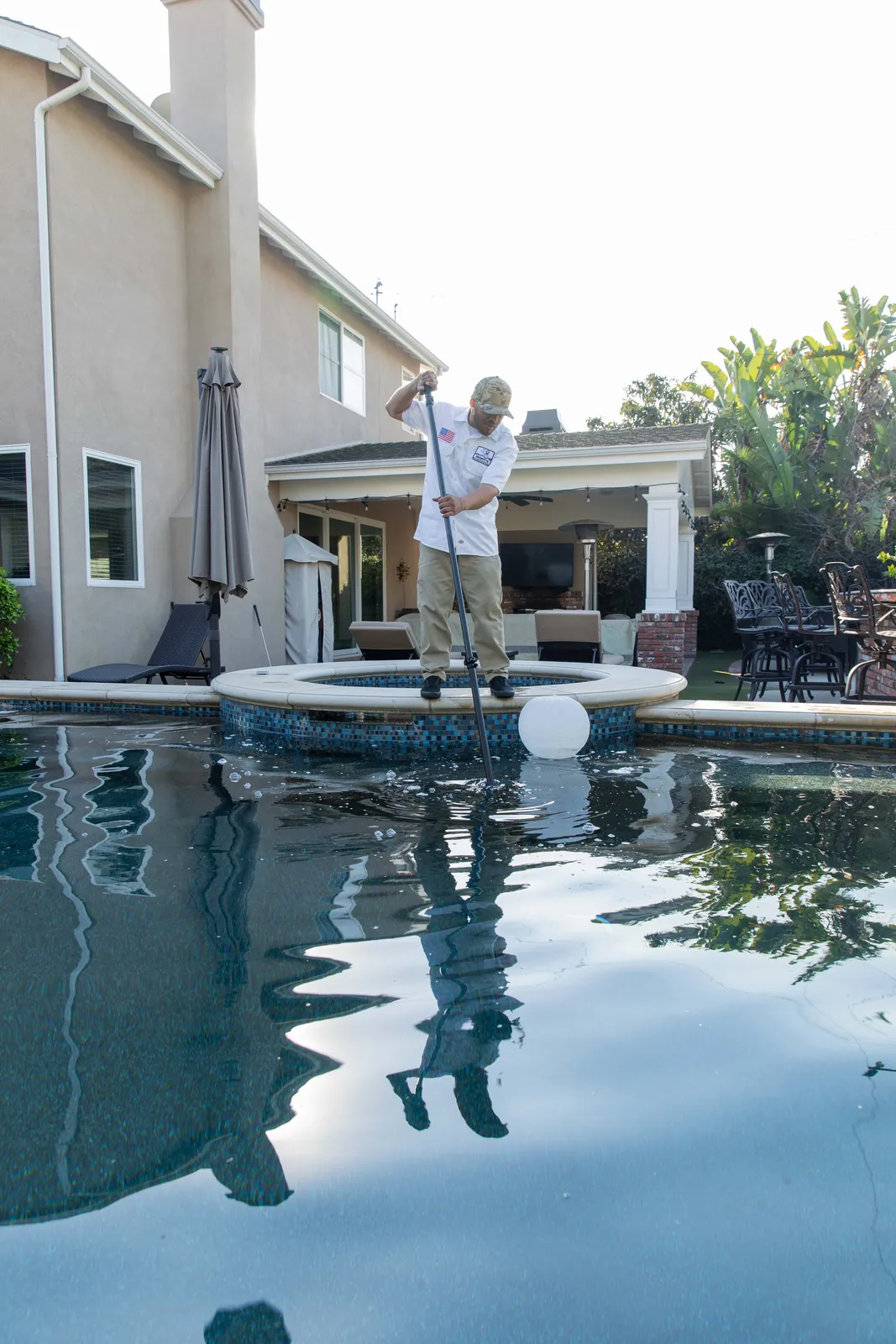
Bearings give a high pitch before they seize. A weekly listen catches the whine; a homeowner hears the smoke after the motor fails.
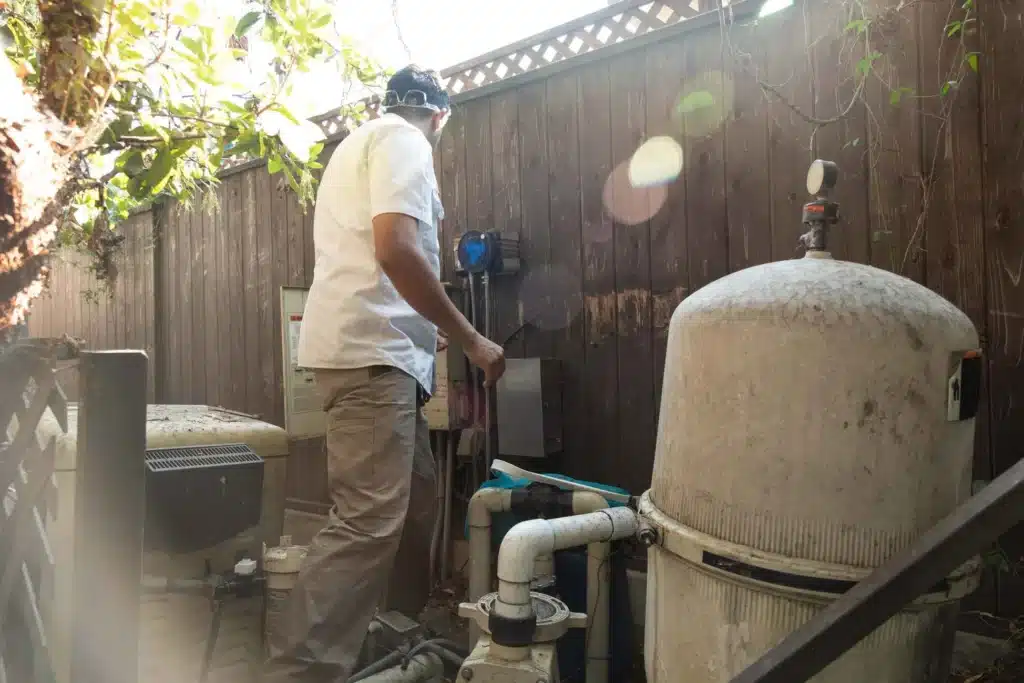
UV embrittles ABS manifolds inside cartridge filters. Hairline cracks send DE or sand into the pool. A pro spots the leak path early.
Low pH etches plaster and corrodes copper into a blue stain on the surface. Caught at the test, fixed at the dose, before refinish.
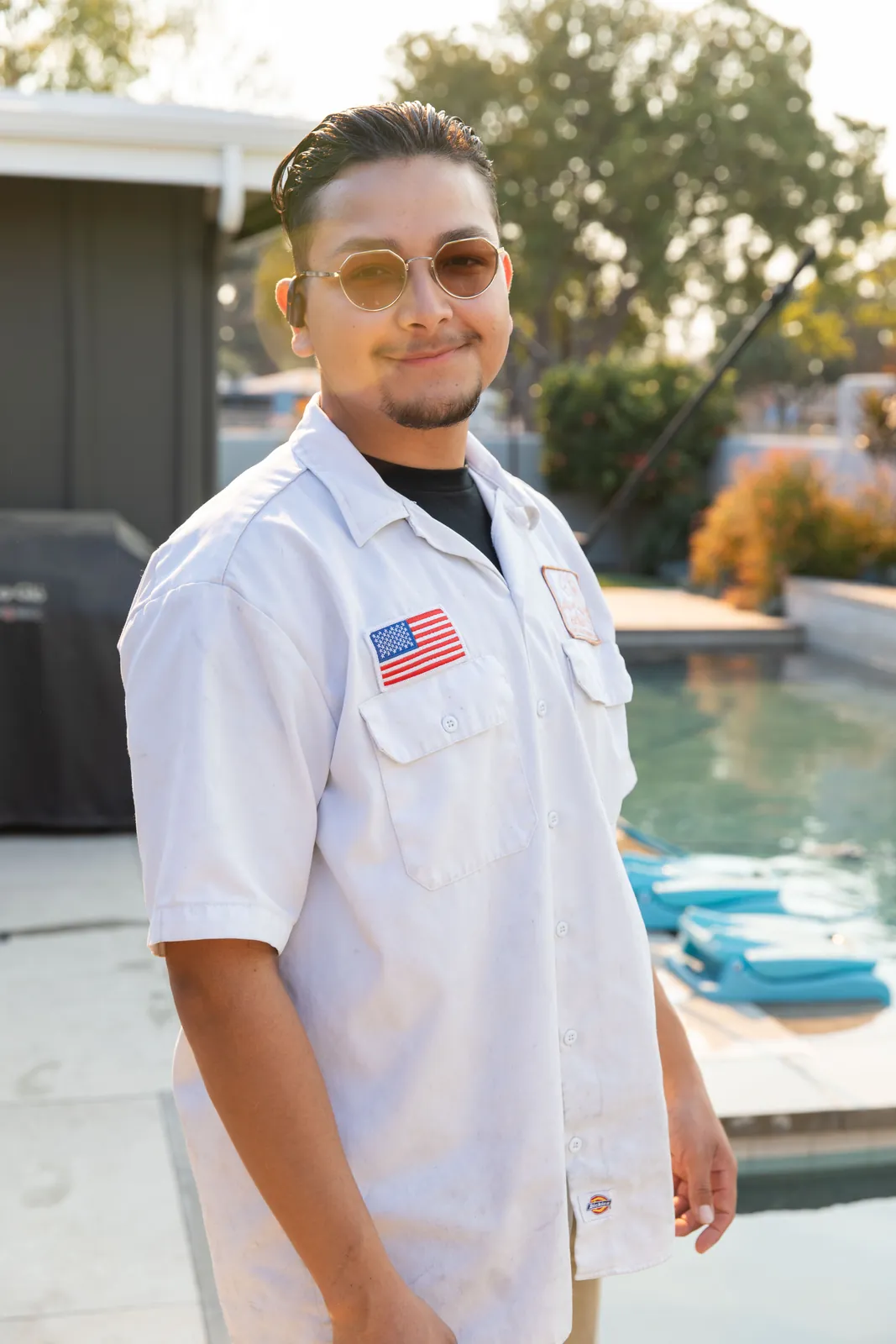
Six failure modes DIY pool owners hit, and the real Long Beach repair bands. Any one breaks even on a year of professional service.
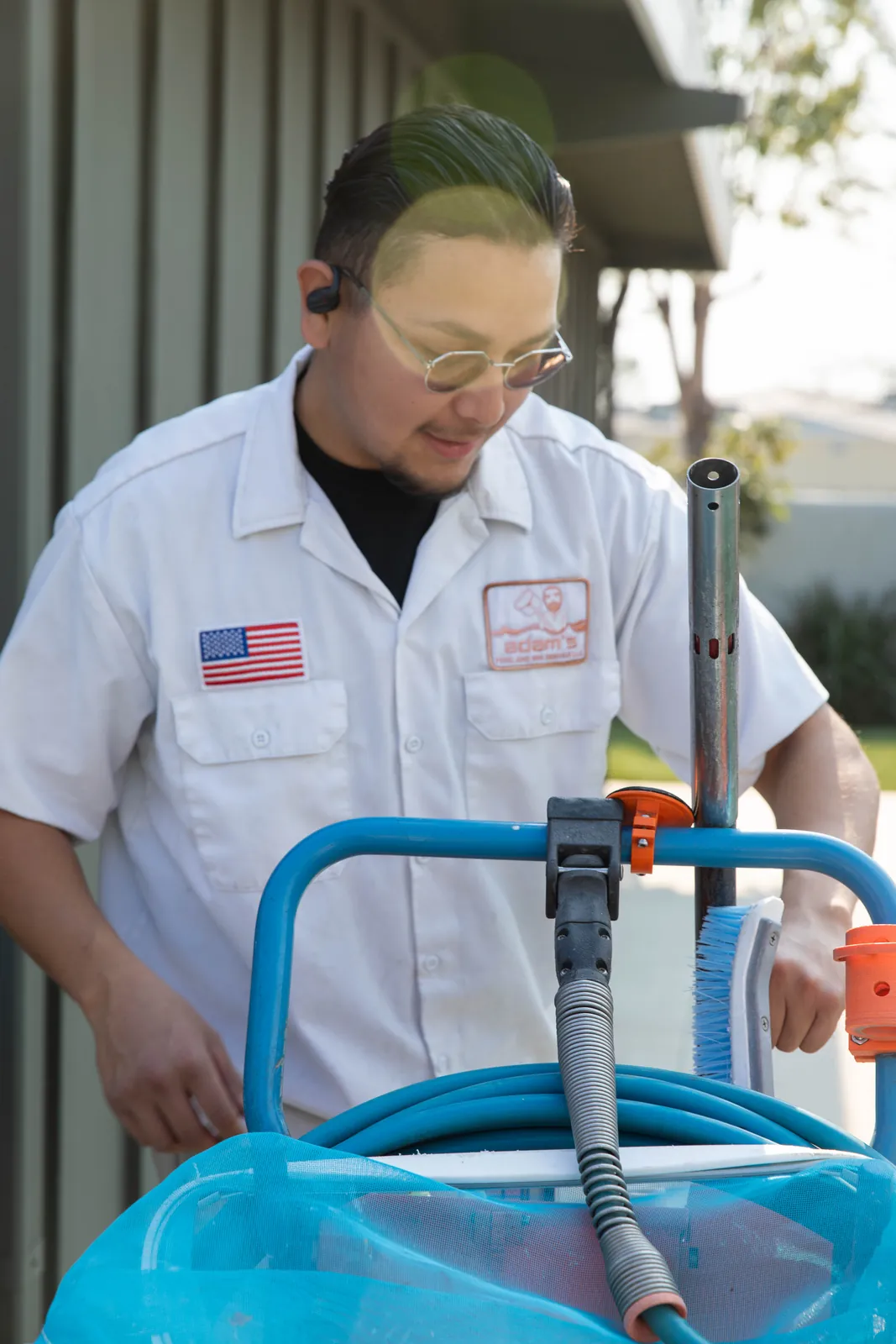
A pump run dry burns the motor. A new variable-speed pump runs $800 to $1,500 installed. Catch the bearing whine and a $90 capacitor saves the motor.
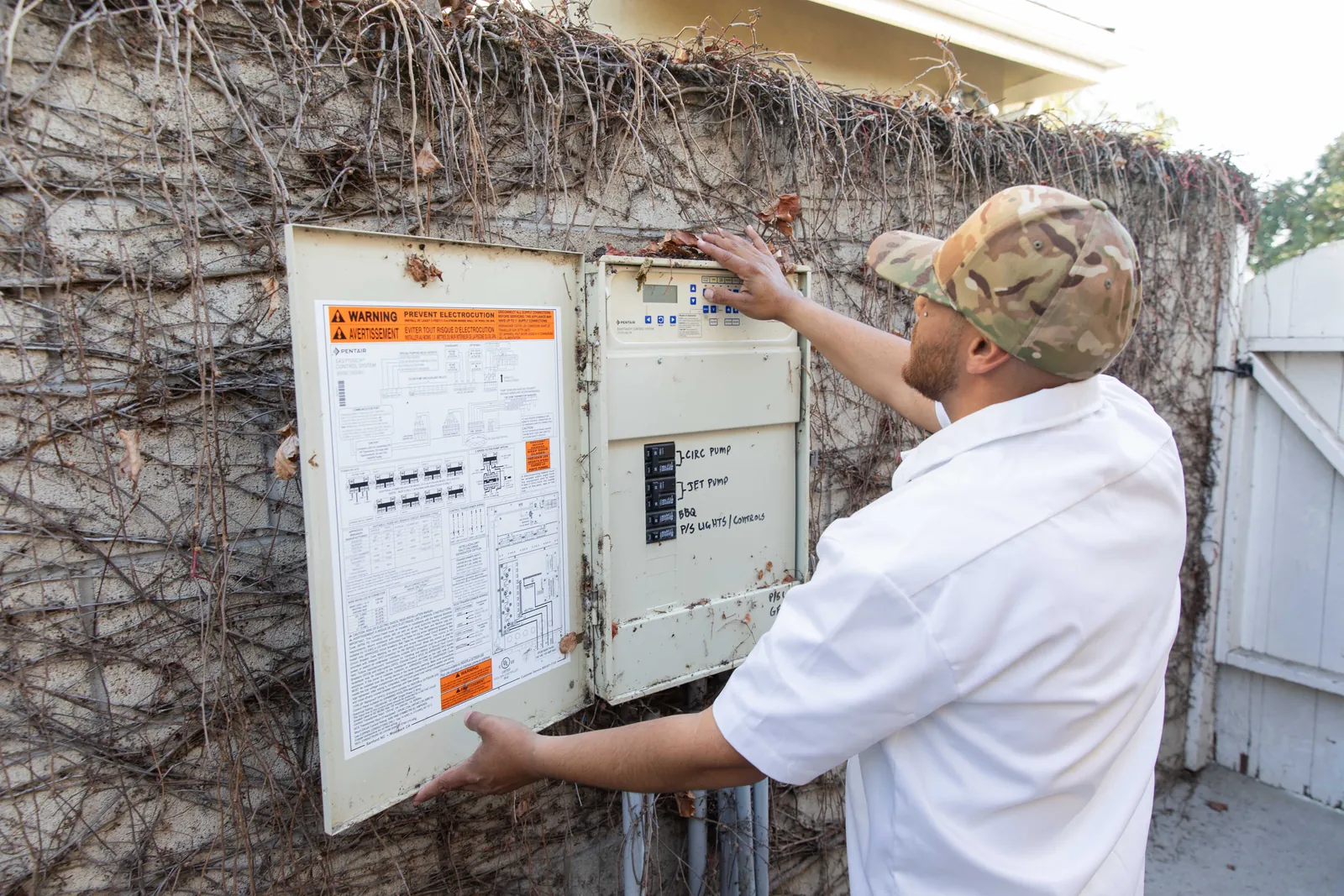
Scaled heat exchangers and ignitor failures run $400 to $1,200 to repair. Full heater replacement runs $2,500 to $5,000. Chemistry drift drives most of it.
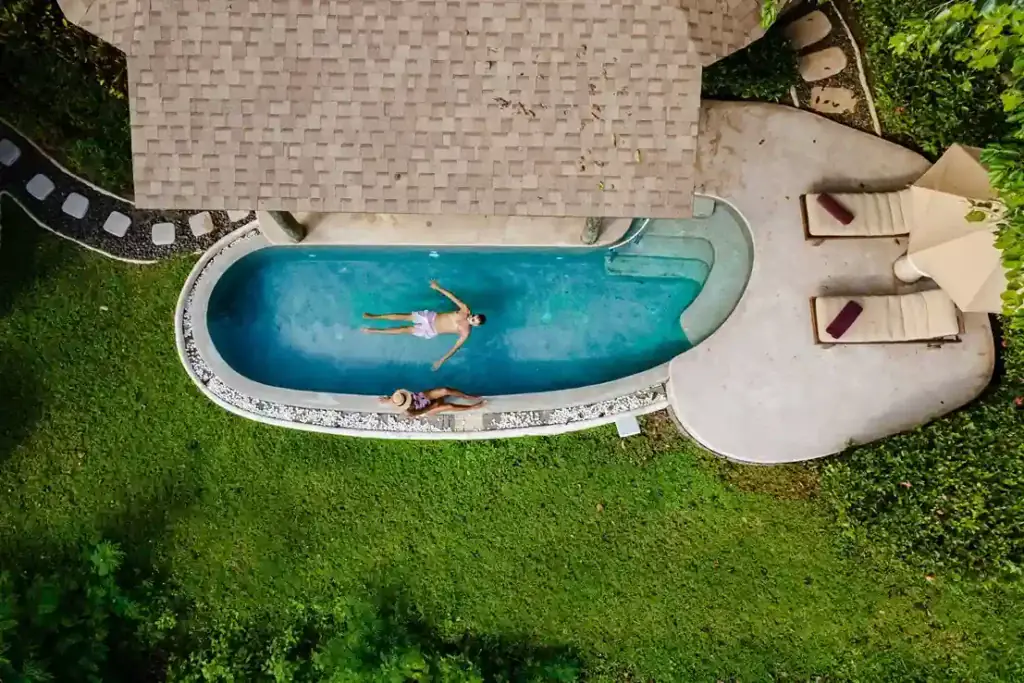
A green pool means shock, clarifier, and a filter clean. Out-of-pocket runs $75 to $200 plus the weekend you can't swim.
Low pH etches plaster. Surface stain repair runs $500 to $2,000, and a full plaster redo costs far more. NPT warranties require documented chemistry.
Most pump and heater warranties require a documented professional service history. A failed $3,000 heater with no log is on you.
A pump rated for ten years lasts five with bad chemistry. A salt cell rated for five lasts two. The math compounds fast.
The supply math looks like a win for DIY. Chemicals, test kits, and shock run $50 to $110 a month for a Long Beach residential pool, plus a one-time $150 to $300 in startup gear.
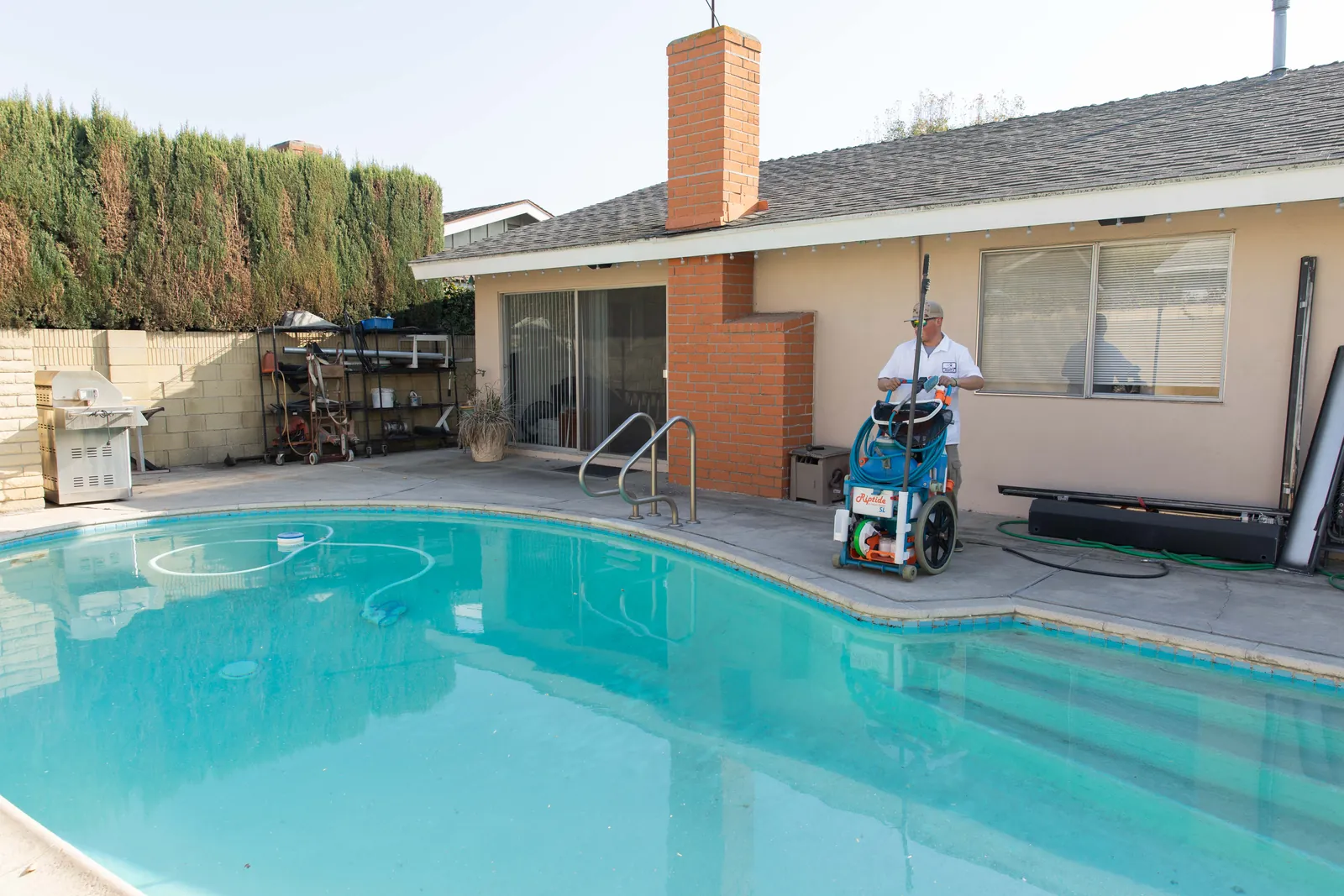
The time math tells a different story. A real DIY routine takes three to five hours a week once you count testing, dosing, skim, brush, vacuum, filter rinse, and supply runs. That works out to 156 to 260 hours a year.
The Long Beach market for credentialed weekly service runs $200 to $370 per month with chemicals included. Adams typically lands about 20% under that range. Read more on pool service vs DIY cost for the full breakdown.
Most pages skip this. Some Long Beach owners come out ahead with DIY, and a real shop will say so:
Five forcing events tell you the math has flipped. Any one of these means a residential weekly pool maintenance call pays back fast.
You've shocked the pool twice and it goes back. Algae has a foothold and your filter cycle isn't cutting it.
The gauge runs 8 to 10 PSI above your startup baseline. The cartridge or DE manifold needs attention now.
A new whine, hum, or rattle means bearings or seals. Catch it early or buy a new motor.
Surface roughness or copper-blue staining means chemistry has been off for weeks. A pro can dose it back.
You've put 100-plus hours into the pool this year and the chemistry still drifts. The math has flipped.
"I have been using Adam's Pool and Spa Service 2016. He & the people that work for him are great! Very responsible & trustworthy. Adam himself comes out whenever I call with specific issues, which is not very often. I would definitely recommend him!"
"We have used Adam's Pool and Spa Service since we built our pool 7 years ago. The service has been great and the pool is always clean and sparkling throughout the year. They are very good at helping us or answering any of our questions. We highly recommend Adam's Pool and Spa Service service."
"Adam's Pool and Spa Service service was communicative, competitively priced, timely, and professional at every step of my pool filter and salt water chlorinator install. Adam explained every piece of equipment and how to maintain it in a way that I could understand, which I appreciated. Would definitely recommend using them."
"I have been a customer of Adam's Pool and Spa Service for 4yrs. Very professional on time & exceptional service. Couldn't be happier. I would recommend his team to anyone. Regards, Gary"
"Reliable, knowledgeabe and responsive. Their service and professonalism are definitely worth the extra cost."
"Adam services my pool and consistently provides excellent, reliable service. He handles everything you'd want from a professional pool and spa company: regular cleaning, chemical balancing, water testing, filter maintenance, equipment checks, troubleshooting, and seasonal upkeep."
[See more reviews on our reviews page](/reviews/).
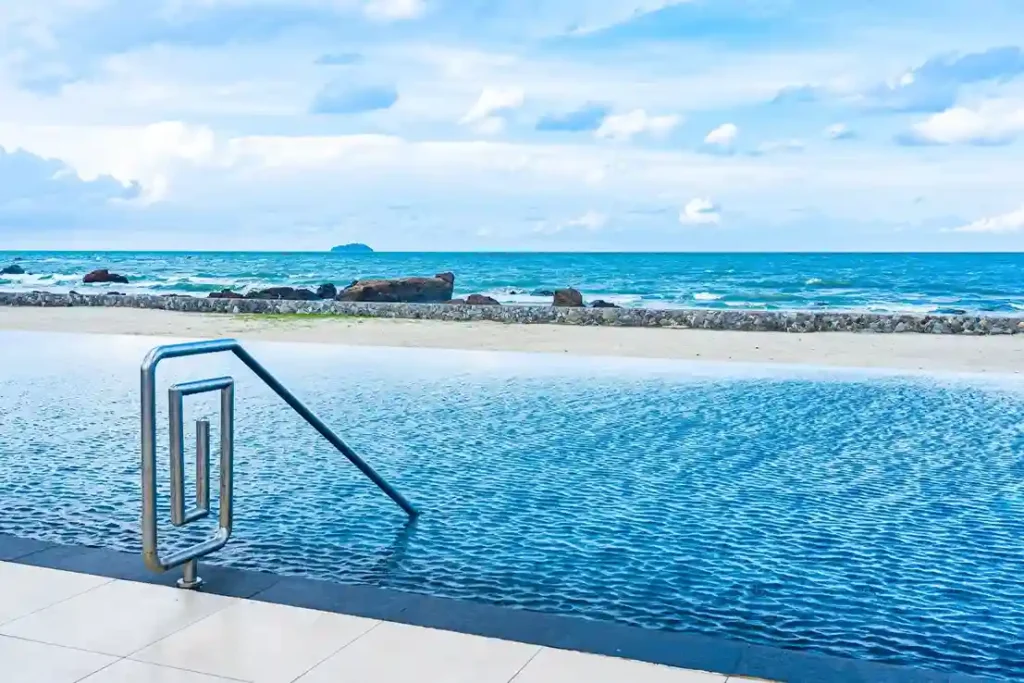
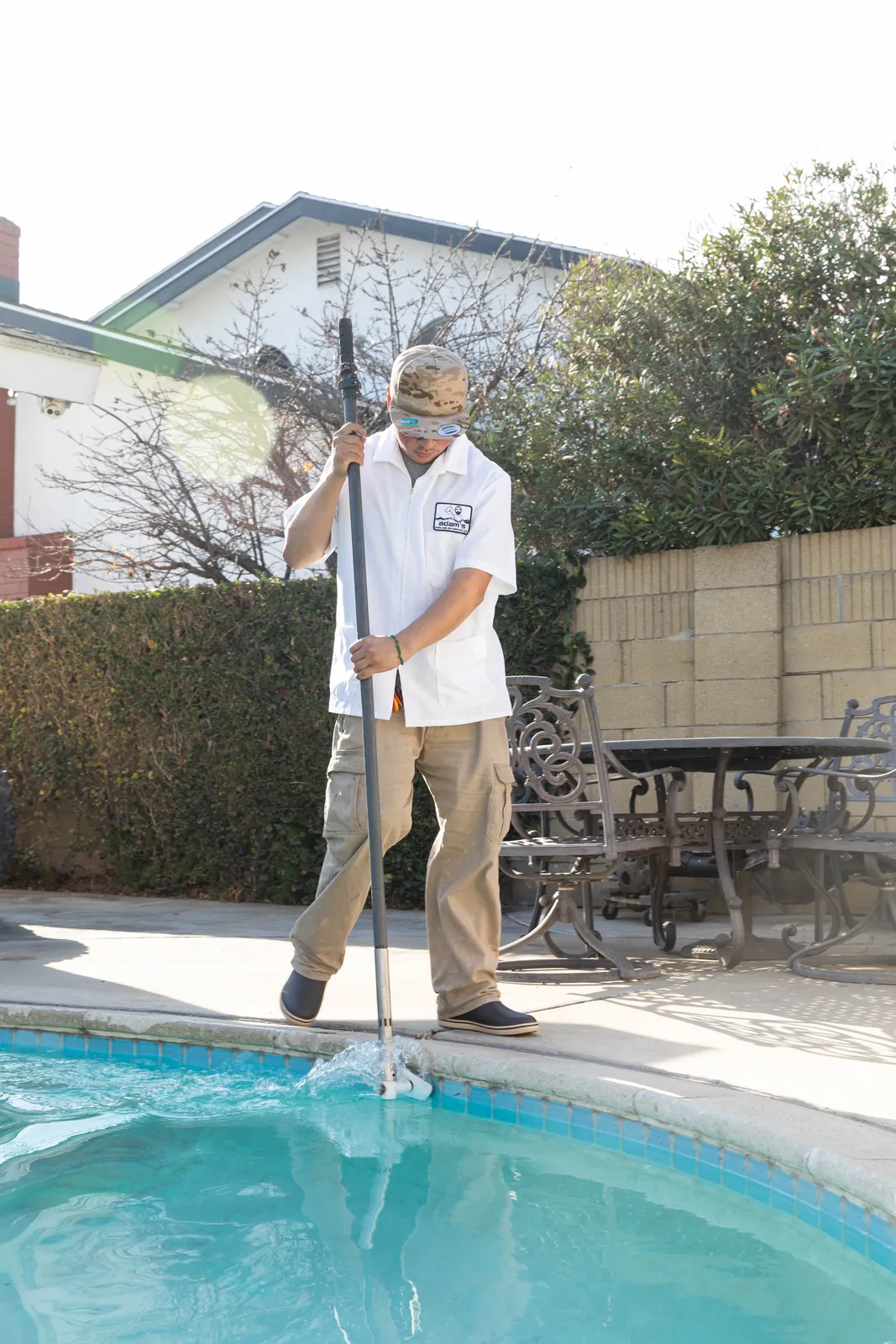
Adam's Pool and Spa Service is based in Long Beach and runs credentialed weekly routes across every neighborhood in the city plus surrounding LA County cities. The route radius runs roughly 25 miles from the shop, and most weekly accounts see the same tech on the same day.
Coastal pools in Belmont Shore, Naples Island, and Alamitos Beach see us most for salt-air corrosion on pump seals and tile-line scaling. Inland pools in Bixby Knolls, California Heights, and Lakewood Village see us for pollen load and chemistry drift tied to year-round heat.
Primary service areas: Long Beach · Belmont Shore · Naples Island · Bixby Knolls · Alamitos Beach · Signal Hill · East Long Beach · Bluff Park
Surrounding cities: Cypress · Lakewood · Seal Beach · Downey · Bellflower · Los Alamitos · Rossmoor · Cerritos
See all service locations · How to choose a pool service company · How to choose a pool cleaning service · Pool cleaning companies comparison
For most Long Beach owners, yes. DIY runs $50 to $110 a month plus three to five weekly hours. Pro service runs $200 to $370 at market, and Adams comes in about 20% under. The premium covers chemistry log, equipment pad walk, and early-warning detection.
Same tech weekly is the right answer to insist on. Rotating drivers means rotating standards and a pool that drifts between visits. Adams runs W-2 employees on marked trucks, with the same tech on the same day for most weekly accounts. Vacation coverage is handled by a backup tech the lead has briefed on the pool.
Six routine catches a homeowner rarely sees. Early heater corrosion, cyanuric acid drift past 80 ppm, salt cell amperage decline, pump bearing whine, filter manifold cracks, and plaster etch from low pH. Each one is cheap early, expensive late.
The Long Beach market for credentialed weekly service runs $200 to $370 per month with chemicals included. Adam's Pool and Spa Service typically lands about 20% under that range. Pricing varies by pool size, equipment complexity, salt-cell exposure, and visit frequency. Repair diagnostics, filter deep cleans, and seasonal recoveries are quoted separately.
A 24-hour callback commitment is the floor. Adams names that as an operational standard. For most Long Beach equipment failures during business hours, on-site diagnosis follows the next business day. Common Jandy and Pentair parts ride on the truck, so a same-visit repair is often possible.
Most pump, heater, and salt cell warranties require documented professional service history. Without a service log, manufacturers can deny warranty claims on plaster, heat exchangers, salt cells, and motors. Read more in our residential chemical balancing guide on what's logged each visit.
Most Long Beach owners need a weekly cleaning year-round. Coastal salt air, hard water, and a swim season that never really closes keep chemistry moving. Bi-weekly can work in cooler months for lightly used pools with strong filtration. The chemistry log will tell you which way to lean after a couple of months. The U.S. Department of Energy guidance on pool pumps covers run-time math.
If the cost-of-NOT math has tipped, call Adam's Pool and Spa Service. We answer Monday through Saturday, 7 AM to 5 PM. A free Pool School session comes with every new account. More about us on the about page.
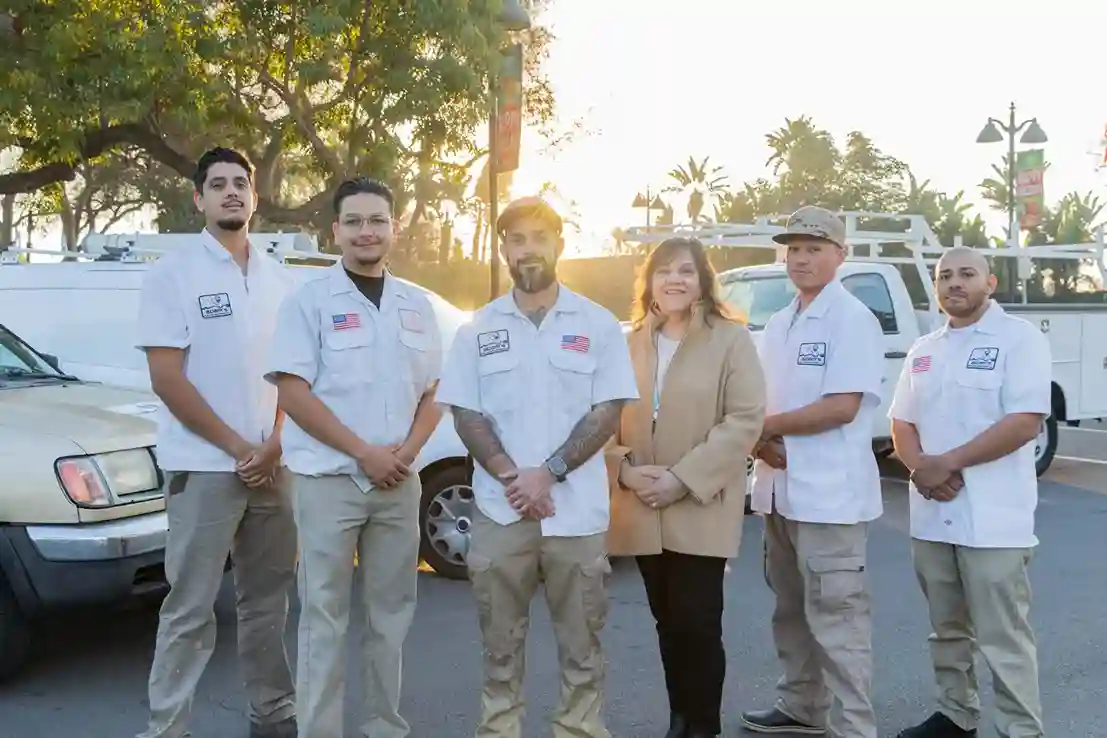
Adam Aguirre founded Adam's Pool and Spa Service in 2013 after a two-year apprenticeship in pool equipment repair. He's Jandy Certified, a Pentair Expert Installer, NPT Lifetime-Warranty Partner, and holds the CSLB C-53 Swimming Pool Contractor license.
Most weekly accounts on the Long Beach route have stayed with Adam's Pool and Spa Service for five years or longer. Adam personally runs the Pool School session on every new account, walking the pump, filter, heater, salt cell, and automation panel by name. Read more about Adam's approach.